Rene Magritte The Human Condition
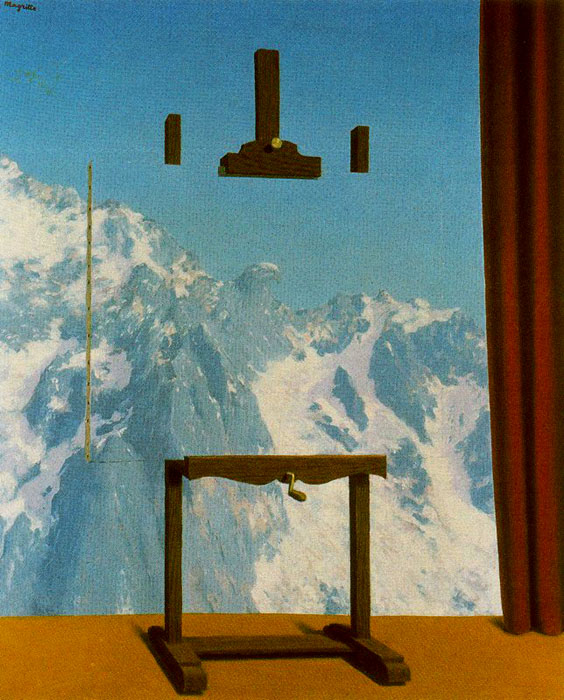
René Magritte (1898-1967) was a famous 20th-century Belgian artist known for his unique surrealist works. Surrealists explored the human condition through unrealistic imagery that often came from dreams and the subconscious. Magritte's imagery came from the real world but he used it in unexpected ways. His goal as an artist was to challenge.
The Human Condition Rene Magritte RoGallery

The paintings of Rene Magritte, with their unsettling of common-sense relationships among objects, images and words, have been compared by many critics to the writings of Ludwig Wittgenstein. The 1933 painting La Condition Humaine, for instance,. [resulting in] assimilation to the surroundings'.65 The human condition, Magritte seems to say.
Rene Magritte The Human Condition (1935) r/museum

The Human Condition, 1933 by Rene Magritte. Two of Magritte's favored themes were the "window painting" and the "painting within a painting." The Human Condition is one of Magritte's earliest treatments of either subject, and in it he combines the two, making what may be his most subtle and profound statement of their shared meaning.. The Human Condition displays an easel placed inside a room.
René Magritte The Human Condition

The Human Condition 1955: Minneapolis Institute of Art " In front of a window seen from inside a room, I placed a painting representing exactly that portion of the landscape covered by the painting.
La Condition Humaine (1993) by Rene Magritte Magritte paintings, Magritte art, Rene magritte

Like most disturbing things though, once you see it, it can't be unseen. This painting is thought to be the artist making a statement about the mysterious persona he hid behind his plain exterior. Magritte pretty much looked like everybody else. He liked to wear a bowler hat, a suit, and a tie and was pretty fly for a white, bourgeois guy.
Rene Magritte The Human Condition

Email: tomgurney1@gmail.com / Phone: +44 7429 011000. Painted in 1933 by Belgian artist Rene Magritte, The Human Condition is an example of the surrealist movement of the time. It features an easel displayed in front of a window with heavy drapes. On the easel is a painting identical to the scene outside to the point where it can take a moment.
Rene Magritte “The Human Condition” 1935 Stefano Tomassetti

The Human Condition displays an easel placed inside a room and in front of a window. The easel holds an unframed painting of a landscape that seems in every detail contiguous with the landscape seen outside the window.. René Magritte 1898-1967, Musées royaux des Beaux-Arts de Belgique, Brussels, 1998, no. 100, repro. 2000 Magritte, San.
The Human Condition (La Condition Humaine) René Magritte Painting Surrealist Art Painting

The Human Condition II, 1935 by Rene Magritte - Meaning and Analysis. Terms of human existence - Rene Magritte. Canvas, oil. 100 x 81 cm. The visible combined with the hidden always creates some dissonance in the mind of the viewers. The work titled "The Human Condition" evokes mixed feelings, contradicting each other.
René Magritte. The Human Condition. 1935. Oil on canvas. 100x81 cm. Private collection

René Magritte - The Human Condition. The Human Condition - 1933. National Gallery of Art - Washington. "In front of a window seen from inside a room, I placed a painting representing exactly that portion of the landscape covered by the painting. Thus, the tree in the picture hid the tree behind it, outside the room.
The Human Condition, Rene Magritte, oil on Canvas, 1933 (Postcard published in 1970s) r/Art

This drawing belongs to a series in which René Magritte depicted an easel before a window. Each features a canvas that exactly replicates the landscape beyond it, inviting questions about the boundaries between art and reality. Magritte juxtaposed a highly realistic style and unexpected imagery to evoke the subconscious and question the experience of time and space.
René Magritte, La condition humaine, 1948 Magritte, Rene magritte, Painting

René Magritte - The Human Condition (1935). I think he's expressing the human condition is something we perceive and create. Bumpier or smoother, both exist in the physical world as well as interiorly in the human psyche. One could view the image as grounded or flowing, both framed by perceiver..
Rene Magritte The Human Condition Art Print CANVASTAR
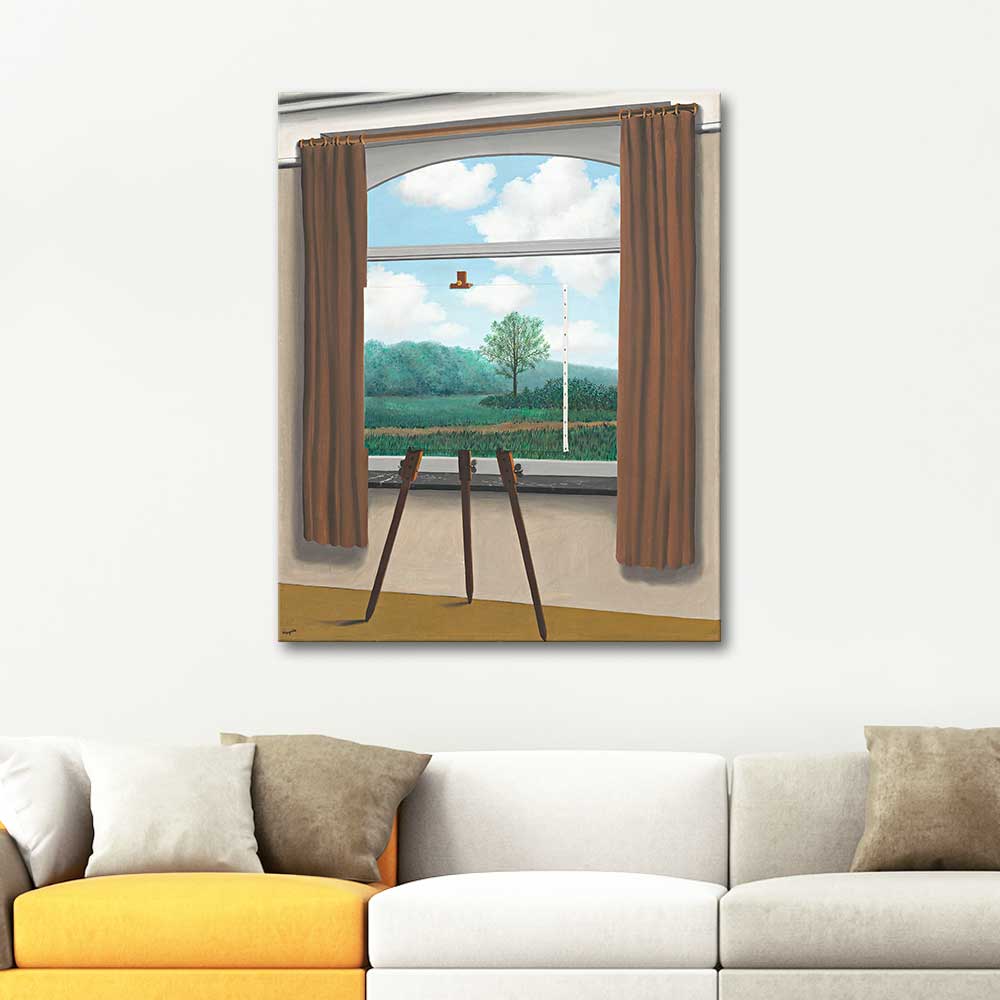
René Magritte was born in Lessines, in the province of Hainaut, Belgium, in 1898. He was the oldest son of Léopold Magritte, a tailor and textile merchant, and Régina (née Bertinchamps), who was a milliner before she got married.. The human condition Rene Magritte 1935. Not to be Reproduced Rene Magritte 1937. Time transfixed Rene.
The human condition Rene Magritte encyclopedia of visual arts
.jpg)
Famous works. Inspired by a true story, Invincible recounts the last 48 hours in the life of Marc-Antoine Bernier, a 14-year-old boy on a desperate quest for freedom. 'The Human Condition' was created in 1933 by Rene Magritte in Surrealism style. Find more prominent pieces of symbolic painting at Wikiart.org - best visual art database.
The human condition Rene Magritte encyclopedia of visual arts
.jpg)
The well-known Belgian born painter Rene Magritte greatly influenced the art world in his time. He was born on 21 November 1898 and died at the age of 68 on 15 August 1967. The witty paintings he created had a resounding effect on the minimalist, conceptual and pop art scene. Magritte loved to take something common and place it into an unusual.
René Magritte’s The Human Condition (1935) detail part of the lost painting The Enchanted

ABSTRACT: The paintings of Rene Magritte, with their unsettling of common-sense relationships among objects, images and words, have been compared by many critics to the writings of Ludwig Wittgenstein. The 1933 painting La Condition Humaine, for instance, depicts a painting that exactly covers a 'real' landscape outside a window - thus.
The human condition II by Rene Magritte Oil Painting Reproduction
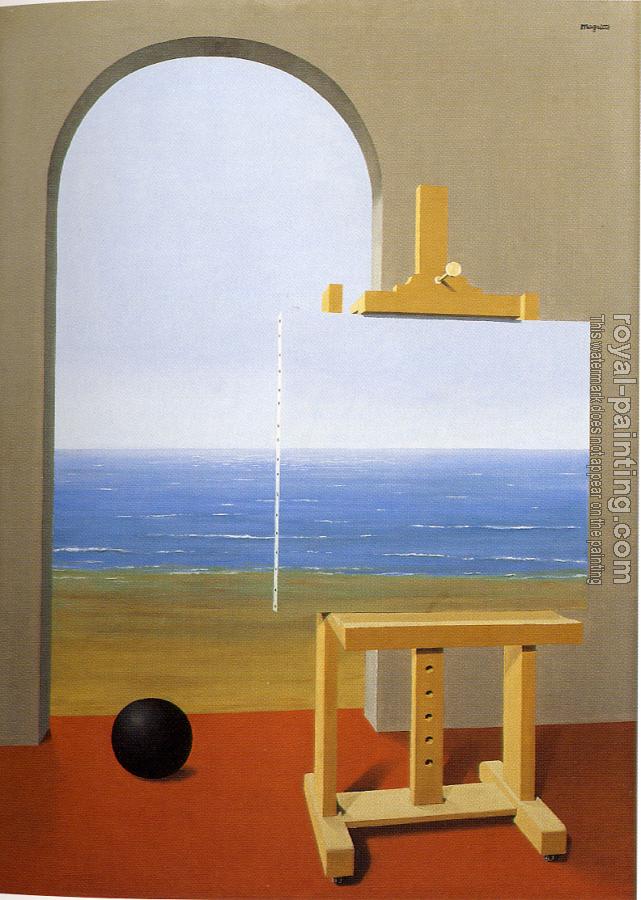
The Human Condition (La condition humaine) is the title of four paintings by the Belgian surrealist René Magritte.One was completed in 1933 and is in the collection of the National Gallery of Art in Washington, D.C. Another one was completed in 1935 and is part of the Simon Spierer Collection in Geneva, Switzerland. A drawing with the same name is kept at the Cleveland Museum of Art and an.
.